
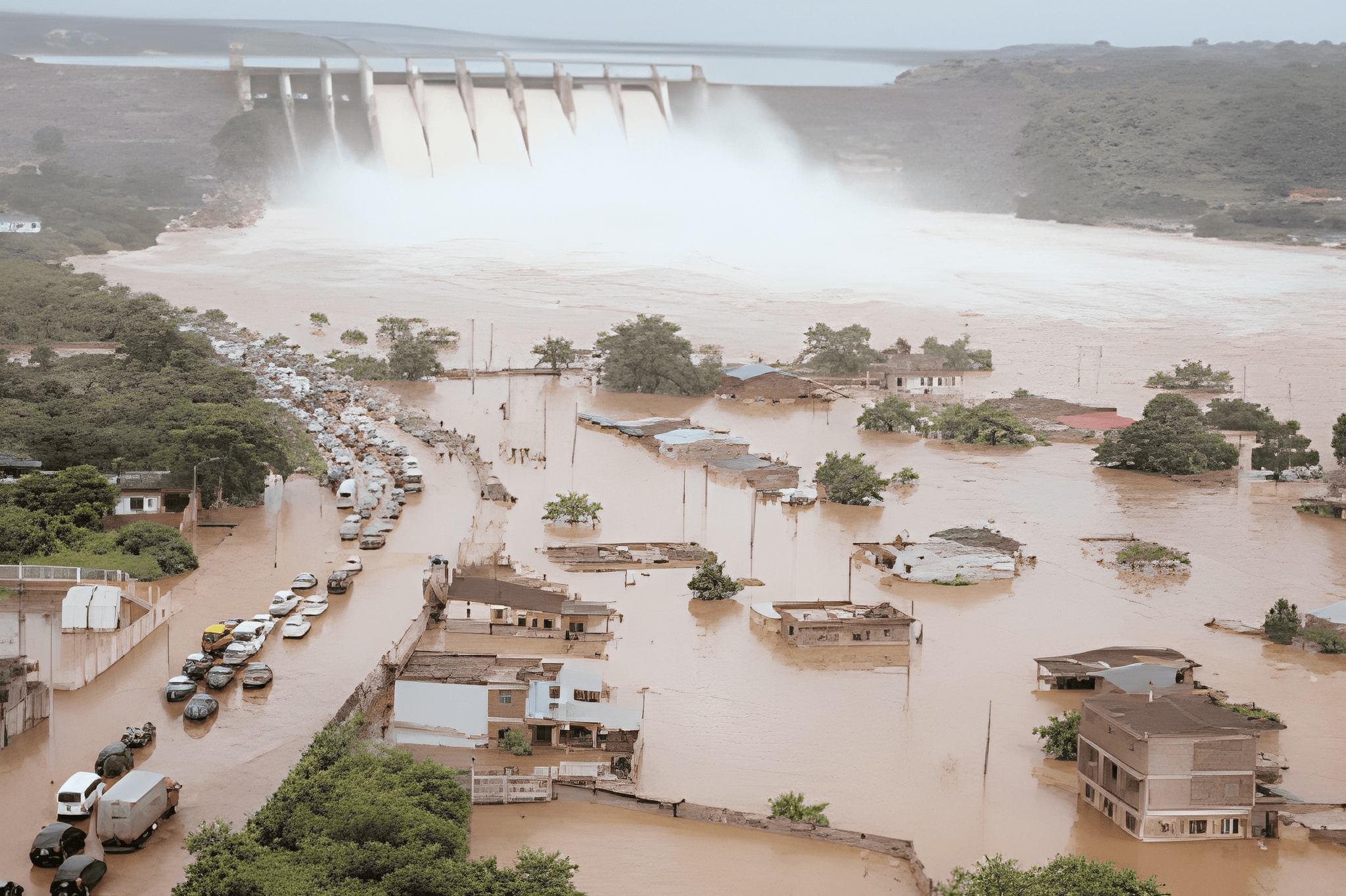
ACCRA, GHANA — Hundreds of homes in parts of Weija and surrounding enclaves have been submerged, leaving thousands of residents stranded or forced to flee following a controlled water spillage at the Weija Dam.
The utility company Ghana Water Limited (GWL) confirmed that all spill gates of the dam were opened after water levels rapidly surged past the maximum safe operating threshold of 48 feet.
Severe Downstream Inundation
The safe discharge of the excess water, intended to prevent undue pressure and safeguard the structural integrity of the dam, has triggered extensive flooding downstream. Several prominent communities within the Greater Accra Region have borne the brunt of the spillage:
- Tetegu — Heavily submerged, with water entering shops and residential spaces.
- Sampah Valley — Cut off as key access roads and low-lying zones became completely inundated.
- Choice — Residential structures and properties heavily flooded, forcing locals to hastily salvage belongings.
The sudden rise of floodwaters has forced many families to rapidly evacuate, moving their valuables and loved ones to higher ground as roads become impassable.
Emergency Evacuation Orders Issued
The Greater Accra Regional Security Council (REGSEC), led by Regional Minister Linda Ocloo, has ordered the immediate and mandatory evacuation of all communities along the downstream course of the Densu River.
“The controlled spillage became absolutely necessary due to persistent heavy rainfall and massive inflows upstream,” Ms. Ocloo stated during an emergency press brief. “REGSEC is undertaking active inspection and evacuation exercises to assess the level of destruction and ensure public safety.”
| Key Metric | Status / Measurement | Impact |
| Normal Spill Level Warning | 45 Feet | Routine safety monitoring triggered. |
| Current Dam Peak Level | Above 48 Feet | All spill gates fully opened to prevent catastrophic breach. |
| Forecasted Risk | Ongoing Torrential Rain | High inflows expected to continue from upstream channels. |
A Long-Term Exercise
According to GWL’s Chief Manager of Public Relations, Mr. Stanley Martey, the Ghana Meteorological Agency has forecast further intense rainfall upstream. As a result, the spilling exercise is expected to continue for weeks—or even months—until water levels stabilize within a safe operating window.
The National Disaster Management Organisation (NADMO) alongside local District Assemblies are rolling out emergency intervention plans to clear illegal structures and physical obstructions blockading water pathways into the sea. State officials have strongly appealed to the public to comply strictly with all emergency security directives to prevent any preventable loss of life.
About The Author