
Ghana–UK Partnership Targets Strategic Jobs and Investment Growth
Discover how the Ghana–UK Business Council is driving millions in foreign direct investment to scale up local manufacturing, agro-processing, and youth jobs.
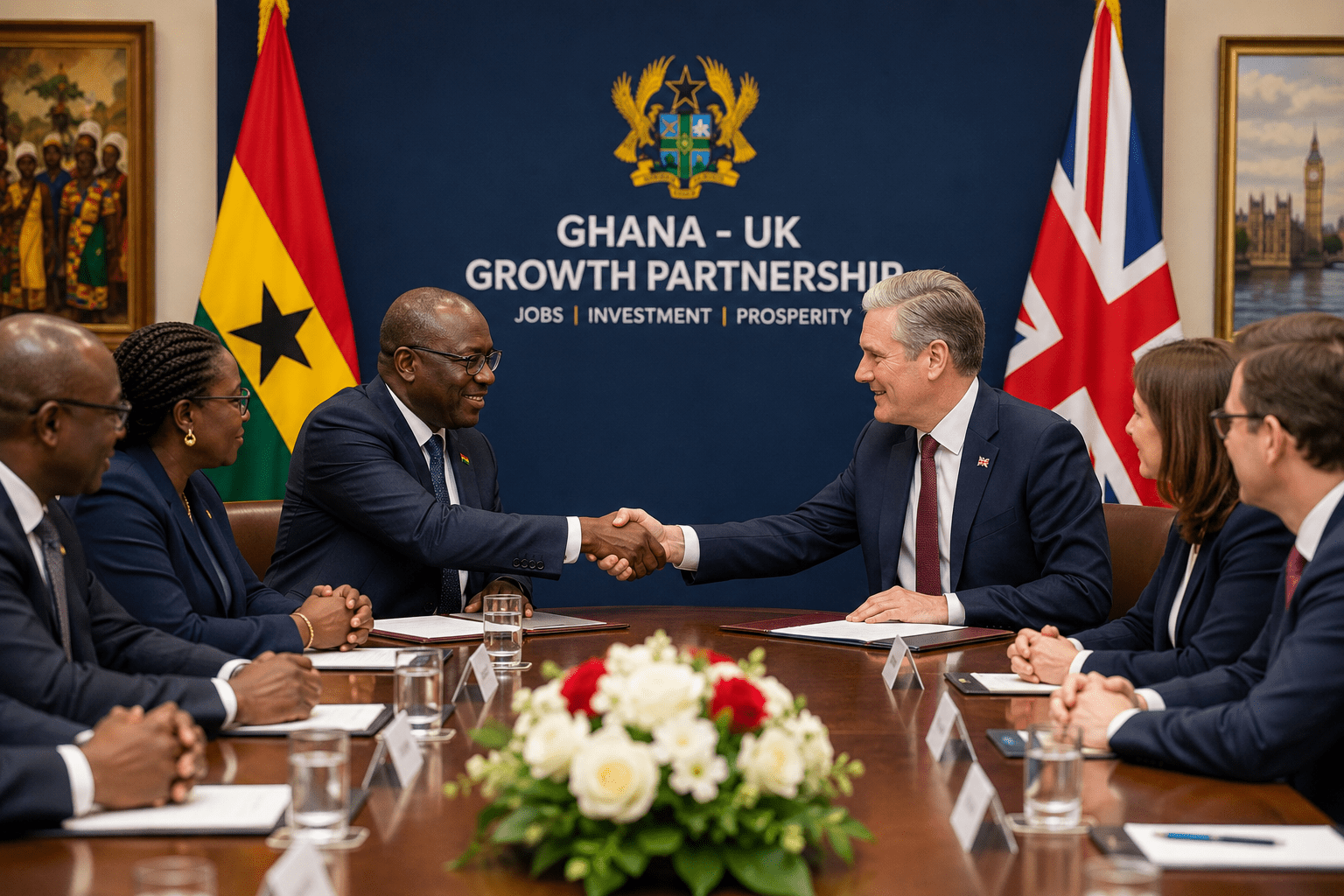
The governments of Ghana and the United Kingdom have strengthened their bilateral economic ties through a reinforced framework designed to accelerate private sector job creation, expand industrial manufacturing, and drive strategic foreign direct investment (FDI) into the Ghanaian economy.
Moving decisively past traditional donor-aid models, the partnership operates primarily through the structural framework of the Ghana-UK Business Council. By aligning British capital markets and technical expertise with Ghana’s domestic industrialization agenda—including the “One District, One Factory” (1D1F) initiative—the collaboration is actively unlocking multi-million dollar investments across critical economic sectors.
Boosting Local Manufacturing and Agro-Processing
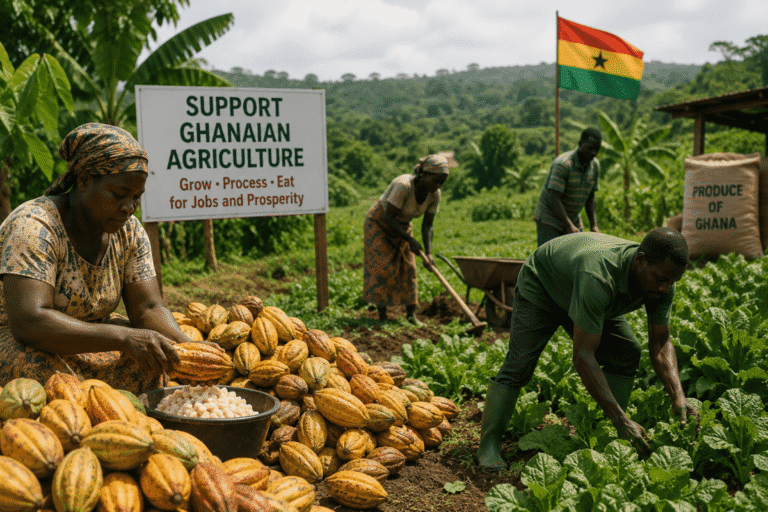
A core priority of the partnership is scaling up Ghana’s value-addition capabilities to reduce its dependence on raw commodity exports. Rather than exporting raw agricultural materials, the collaboration facilitates dedicated financial credit lines and technical partnerships to build localized processing infrastructure.
Key target areas driving this industrial growth include:
Agro-Processing: Upgrading local processing capacity for cocoa, shea butter, and tropical fruits to meet stringent British and European import standards.
Automotive & Components: Supporting Ghana’s emerging automotive assembly hubs by integrating local parts manufacturing into global supply chains.
Garments & Textiles: Expanding local textile factories to boost non-traditional apparel exports to international retail markets. By focusing on processing raw goods locally, the initiative is successfully reducing post-harvest losses for Ghanaian farmers while simultaneously creating sustainable blue-collar and technical jobs for youth across the country.
Supporting SMEs and the Digital Economy
Recognizing that Small and Medium-Sized Enterprises (SMEs) employ the vast majority of the domestic workforce, the partnership has introduced specialized investment pipelines. Central to this is the UK-Ghana Gold-Key Initiative, which directly matches vetted local businesses with international investors and British buyers.
Furthermore, the pact places a heavy emphasis on digital infrastructure and the fintech ecosystem. By backing digital regulatory reforms and cross-border payment simplifications, the two nations aim to lower transaction costs, making it significantly easier for young entrepreneurs in Accra, Kumasi, and Tamale to scale their operations globally.
Strategic Perspectives
This partnership marks a fundamental shift toward true commercial interdependence,” stated a senior official from the Ministry of Trade and Industry during a council review. “By directing foreign investment straight into manufacturing and industrial value addition, we are building a resilient economic foundation that creates actual jobs for our young graduates and actively stabilizes the Cedi against external market shocks.”
British diplomatic representatives have echoed these sentiments, emphasizing that Ghana remains a highly attractive, strategically stable gateway for investment within the West African sub-region. The UK delegation confirmed that British businesses are increasingly eager to partner with Ghanaian firms, provided the local regulatory environment continues to prioritize transparency, contract enforcement, and ease of doing business.
As structural projects under the pact continue to scale up this month, local economic analysts view the development as a timely intervention to sustain the country’s macroeconomic recovery, boost domestic production, and lower youth unemployment metrics nationwide.
About The Author