
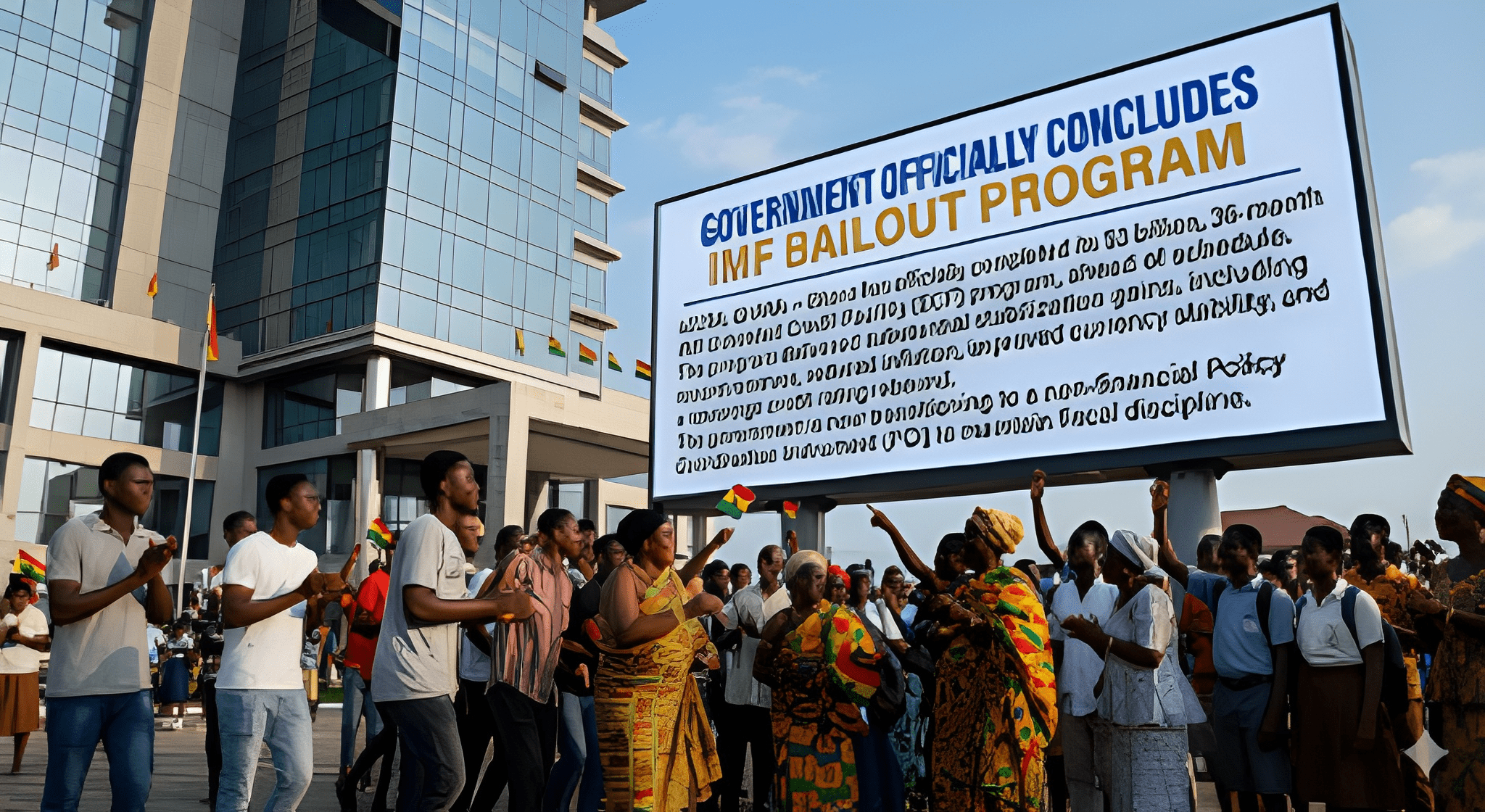
ACCRA, GHANA — In a major economic milestone, the Government of Ghana has officially concluded its $3 billion, 36-month Extended Credit Facility (ECF) bailout programme with the International Monetary Fund (IMF).
The completion of the program, which was achieved ahead of schedule, marks a definitive exit from the emergency financial bailout launched in 2023 to rescue the nation from severe macroeconomic instability.
Macroeconomic Stabilization Gains
According to statements from both the Ghanaian presidency and the IMF, the strict fiscal discipline and aggressive structural reforms implemented over the last few years have delivered “substantial stabilization gains”.
The administration pointed to several drastically improved economic indicators as proof of recovery:
- Record Reserves: Gross international reserves soared to an all-time high of approximately $14.5 billion, providing nearly six months of import cover.
- Inflation & Currency: Inflation has dropped significantly, while market confidence in the Ghanaian cedi has markedly improved.
- Debt Sustainability: Public debt as a share of GDP has declined sharply. Bilateral debt relief agreements finalized under the G20 Common Framework have successfully eased pressure on public finances.
- Credit Rating Upgrades: Ghana’s sovereign credit rating rebounded from “restricted default” (Junk Status) to a ‘B‘ with a positive outlook.
“This milestone reflects improved fiscal performance, normalized relations with global creditors, and renewed market confidence,” stated Minister of State for Government Communications, Felix Kwakye Ofosu.
The Transition to a Non-Financial “PCI” Framework
Rather than walking away from the international lender entirely, Ghana has secured a staff-level agreement to transition directly into a non-financial Policy Coordination Instrument (PCI).
Unlike the outgoing ECF, the PCI does not involve financial loans or further bailout money. Instead, it serves as a technical support framework designed to signal economic credibility to international private investors and development partners.
| Feature | Outgoing ECF Bailout | New PCI Framework |
| Primary Goal | Emergency crisis management & stabilization | Long-term fiscal discipline & growth |
| Funding | $3 Billion in direct loans | $0 (Non-financing technical aid) |
| Target Debt Level | Debt Restructuring Mode | Keeping public debt $\le$ 45% of GDP by 2034 |
The IMF noted that the “carefully calibrated fiscal space” earned through recent economic improvements will now allow the Ghanaian government to address domestic priorities, including boosting youth employment and expanding social spending.
Looking Ahead
While celebrating the exit, the IMF warned that global uncertainties—particularly ongoing conflicts in the Middle East that threaten energy and fertilizer prices—mean Ghana must maintain strict policy momentum. The government maintains that transitioning to the PCI will lower future borrowing costs and unlock institutional investments for critical infrastructure.
About The Author